Cool Laser
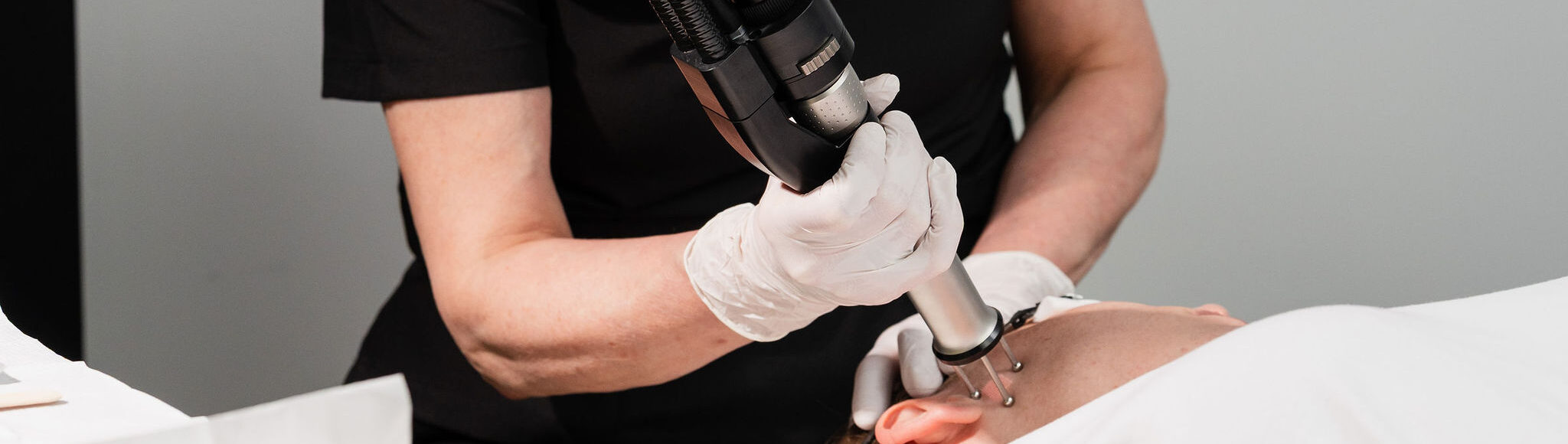
Cool Laser is a market leader Er:YAG laser for high-precision skin resurfacing and rejuvenation. Erbium laser resurfacing is designed to remove superficial and moderately deep lines and wrinkles by removing the outer layers of skin and encouraging new skin growth. It treats sun-damaged skin, uneven skin tone, open pores, scarring, and stretch marks.
Erbium fractional laser treatment is a skin resurfacing procedure designed to improve skin texture, tone, and firmness by precisely removing controlled layers of the skin and stimulating regeneration. The treatment uses an Er:YAG (erbium-doped yttrium aluminium garnet) laser operating at a wavelength of 2940 nm, which is strongly absorbed by water in the skin.
How erbium laser resurfacing works
The Er:YAG laser delivers short, concentrated pulses of light to the skin. Because this wavelength is highly absorbed by water, it allows:
- Extremely precise removal of skin tissue
- Layer-by-layer ablation of the epidermis
- Controlled heating of the dermis beneath
This process:
- Removes damaged or uneven outer skin layers
- Stimulates collagen production in the dermis
- Encourages the growth of new, healthier skin
Treatment depth can be adjusted, ranging from very superficial resurfacing (micropeels) to deeper resurfacing for more pronounced skin concerns.
What erbium fractional laser is designed to address
Erbium laser resurfacing may be used to improve:
- Superficial and moderately deep lines and wrinkles
- Sun-damaged skin
- Uneven skin tone and texture
- Enlarged pores
- Acne scars and other superficial scarring
- Stretch marks
The treatment focuses on improving surface quality and stimulating collagen rather than tightening skin through excision.
Treatment areas
Erbium fractional laser resurfacing can be used on multiple areas of the body, including:
- Face
- Neck
- Chest (décolletage)
- Hands
- Abdomen
Treatment planning is tailored to the area being treated, skin thickness, and individual concerns.
Fractional technology
Fractional laser treatment works by treating a fraction of the skin at a time, leaving surrounding tissue intact. This approach:
- Promotes faster healing
- Reduces overall downtime
- Lowers the risk of complications compared to fully ablative resurfacing
The untreated skin between laser channels supports rapid regeneration.
Erbium laser compared to CO₂ laser
One of the key advantages of Er:YAG laser resurfacing is its precision and reduced thermal damage to surrounding tissue. Compared to CO₂ lasers, erbium lasers generally result in:
- Less swelling
- Less redness
- Reduced risk of prolonged recovery
This makes erbium laser resurfacing suitable for patients seeking effective resurfacing with shorter downtime.
Suitability for different skin tones
Because of its controlled and precise energy delivery, erbium laser resurfacing may be suitable for a wider range of skin tones, including darker skin types, when performed by experienced clinicians and with appropriate settings.
Suitability is always assessed during consultation.
Recovery and results
Recovery time depends on treatment depth. Superficial treatments may involve mild redness and flaking, while deeper resurfacing requires a longer healing period. As the skin heals, improvements develop gradually as new collagen forms.
Results commonly include:
- Smoother skin texture
- Improved tone and clarity
- Reduction in lines and surface imperfections
- Firmer, more resilient skin over time
Consultation and assessment
A consultation allows for assessment of skin condition, discussion of resurfacing depth, and explanation of expected outcomes and recovery. The most appropriate laser settings are selected based on skin type, concerns, and tolerance.
The emphasis is on clear, factual information and a measured, safety-led approach to laser skin resurfacing.
Before & Afters
Below are some of the before & afters performed by consultants here at LASE Cosmetic.
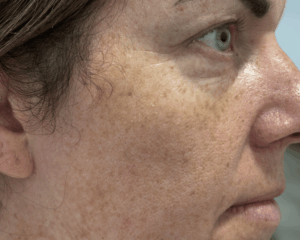
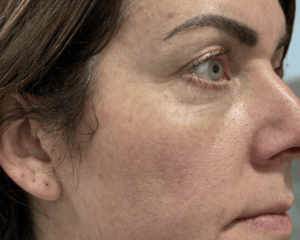
Face
Consultant: Lisa Ali-Khan RGN INP
Cool Laser
Frequently Asked Questions
Please read the frequently asked questions below which may answer any queries or ease any concerns you may have.
The Erbium (Er:YAG) fractional laser is designed to regenerate the skin both deep down and on the surface. The laser emits light energy that is absorbed by water as the light hits the skin. The tissues that contain water are vaporised.
Fractional Erbium laser uses a matrix of microscopic laser beams, each the size of a human hair, to penetrate into the skin, leaving much of the surrounding skin undisturbed. Because nearby cells are undamaged, they can move into the laser-treated area and promote rapid healing, stimulating the formation of new collagen. The excess heat that is generated results in collagen shrinkage, which tightens the skin further.
As skin cells are mostly composed of water, the heat produced by the laser light is scattered over the skin. The object is to induce controlled damage to the skin to stimulate it, just enough to promote healing. This damage will be like a burn and afterwards, the skin will feel warm. Deeper wrinkles require more treatment, while shallow lines and wrinkles will require less treatments.
Erbium YAG laser is indicated for skin lesions such as sun keratosis, atrophic facial scars (acne, chickenpox), dyschromia (melasma, freckles), facial wrinkles, stretch marks, sagging skin and large pores. Using pulses of variable depth, even patients with deeper wrinkles can achieve excellent results.
The treatment is typically well tolerated; however, it’s common for heat to develop in the skin immediately after the procedure, resulting in a sensation similar to moderate sunburn—hot and sore. Redness and swelling in the treated area may occur, lasting between 1 to 3 days. You might also experience dryness and tightness in the skin, with peeling potentially lasting several days. Unlike traditional skin resurfacing, blistering, and crusting are less likely after this procedure. Any dryness can be addressed with a range of skincare products that will be supplied to you.
All areas of the body can be treated with Erbium fractional skin resurfacing but it should be emphasised that these techniques work best on facial skin, neck, décolleté and back of the hands. Facial skin is the most suitable area of the body for treatment because of the abundance of dermal glands. These glands, such as the sweat and oil glands, provide the new cells that will migrate to the surface of the skin.
All types of skin colour can be treated except dark Afro-Caribbean skin.
We recommend that you pause any treatments like retinol, tretinoin, salicylic acid or glycolic for at least 14 days prior treatment. We recommend that you do not tan or use fake tan for at least 4 weeks prior to and for at least 6 weeks after this treatment. Certain medications can increase light sensitivity, but this would be discussed at your patch test appointment prior to the full laser treatment.
No, we provide you with all you need to care for your skin post treatment. This includes a Cleanser, a soothing ointment and moisturiser and a SPF 50 protection.
Heat build-up occurs in the skin during the procedure and the resulting mild discomfort is managed with cool compresses at the end of treatment. The procedure does not require a topical anaesthetic and most patients describe discomfort as 2 or 3 out of 10 on a pain scale.
A sunburn sensation, including moderate redness and swelling of the skin usually occurs and lasts 1 to 3 days. Expect mild peeling to take place usually at day 4 to 7. Dryness of the skin is treated using a recommended moisturiser, forming a seal that prevents further water loss. There is a very small risk of pigment change, infection and scarring following treatment. Laser treatment may produce temporary grid patterns in the skin. This is very rarely permanent.
The skin looks pink afterwards ranging from slightly pink for a micropeel, to intense red for a deeper peel. Microscopic holes (pixels) will be visible, which is normal. In the case of a micropeel the pinkness settles over 1-2 days. In the case of deeper peels, the skin looks deep red, and there may be some oozing and the redness settles over 7-10 days. It is important to use good sun protection as the skin recovers to protect the fresh new skin from being damaged again. As the skin heals it reveals fresher, younger looking skin and reduces surface irregularities and brown spots. New collagen continues to develop over 3-6 months.
Yes, a patch test is needed at least two weeks before your treatment, even if you have undergone this procedure elsewhere in the past. The patch test only takes about 10 minutes and can be performed during your consultation appointment.
There is no evidence whatsoever to suggest that laser treatment can be linked to skin disorders or increased risk of skin cancer. However, as with any laser or light-based treatment, there is a very small risk of potential side effects such as pigment changes and scarring. The risk of these occurring can be reduced to an absolute minimum by ensuring that patients follow the pre and post treatment advice given during the initial consultation.
For optimal results, most patients will require 3 sessions (approximately 1 session every 4-6 weeks). In some circumstances, more sessions may be needed. This will be discussed at your consultation.
The results of this treatment are permanent. However, over time, concerns such as pores, pigmentation or fine lines may return. So, you may benefit from doing Erbium fractional laser again in the future. Patients often have one treatment a year to maintain maximum results.
Prices vary slightly depending on whether you are having a larger or smaller area treated. Prices start from £500.
If you are interested in learning more about Erbium Fractional Laser treatment please request a consultation or contact us.
Don’t just take our word for it
We combine expert surgical care with advanced non-surgical treatments in Newcastle.
Reviewed on TrustPilot & Google
Request A Consultation
Second Floor, The Jesmond,
Lyndhurst Avenue, Newcastle,
NE2 3HH
"*" indicates required fields